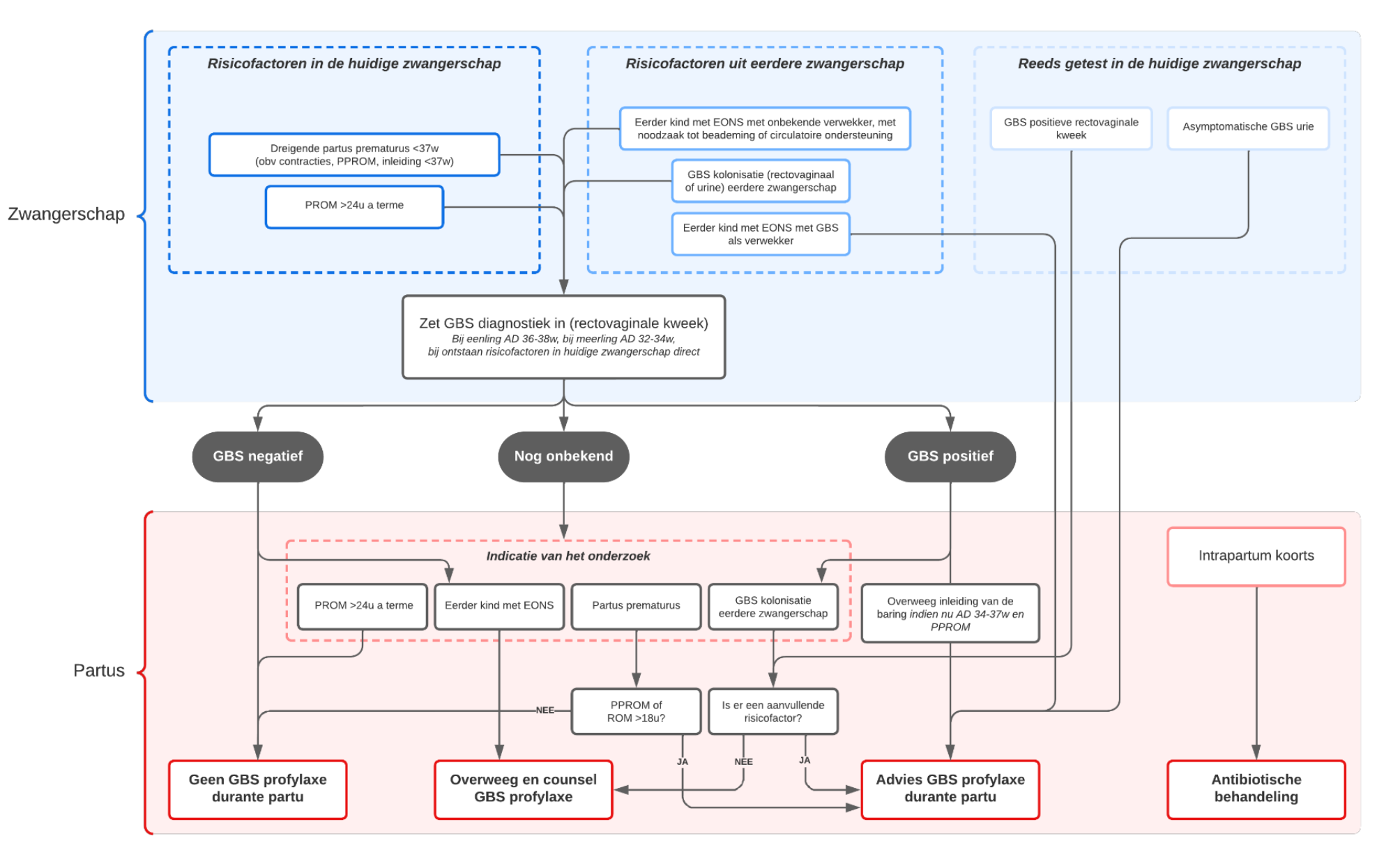
GBS stands for Group B Streptococcus, a type of bacteria found in about 20% of pregnant people in the Netherlandswithout causing any symptoms. This is called colonisation. Although GBS is usually harmless for the mother, it can sometimes be passed on to the baby during birth and, in rare cases, lead to infection in the newborn.
Risk Factors for GBS Infection in Babies
Certain situations increase the chance that a baby may develop a GBS infection:
- Preterm birth (< 37 weeks): Early labour increases the risk of infection.
- Prolonged rupture of membranes (> 18 hours): The longer the membranes have been broken, the higher the chance of GBS being passed on.
- Previous baby with a GBS infection: If you’ve had a baby with GBS infection before, your risk in future pregnancies is higher.
- GBS in the urine during pregnancy: Finding GBS in the urine is a sign of higher bacterial load.
- Fever during labour (> 38°C / 100.4°F): Maternal fever can indicate infection and raises the risk for the baby.
GBS Screening
In the Netherlands, routine GBS screening is not standard for all pregnant people. Screening may be considered if:
- You had GBS colonisation in a previous pregnancy, as the likelihood of being a carrier again is about 50%.
- You had a previous baby with a serious GBS infection or without a known cause — talk with us about whether screening makes sense for you.
Prevention and Treatment
To reduce the risk of a GBS infection in your baby, antibiotics can be given during labour. This is called intrapartum antibiotic prophylaxis (IAP). It’s considered in cases such as:
- A positive GBS test during pregnancy – for example, if GBS was found when your urine was cultured.
- Presence of risk factors (as listed above).
Giving antibiotics during labour can significantly lower the chance of your baby developing a GBS infection.
If you are labouring with antibiotics, you will need to give birth in a hospital or birth centre. This doesn’t otherwise change your birth — you can still use water, shower, and choose comfortable positions.
Symptoms of GBS Infection in Newborns
GBS infection in babies can develop quickly. Watch for:
- Grunting or other breathing difficulties
- Poor feeding or difficulty feeding
- Grey or pale skin colour
- Sleepiness or limpness
- Temperature changes (too high or too low)
If you notice any of these signs, contact us or your GP immediately.
What Can You Do?
- Talk about your concerns: Discuss GBS and any risk factors with us.
- Watch for symptoms in your baby: Be alert to the signs above after birth.
- Include medical advice in your birth planning: If your care provider recommends antibiotics during labour, this can reduce the risk of infection.
- Urinary tract infection during pregnancy? Have your urine tested by your GP and let us know if GBS was found.
Read More
Conclusion
Although GBS colonisation usually doesn’t cause symptoms for the parent, it’s important to be aware of the potential risks for your baby and discuss whether screening and preventive measures might be helpful for you.