In the previous article, we explained more about fear of childbirth — and that a certain level of tension before birth is completely normal. We also explained that we speak of fear of childbirth when there’s an unhealthy (negative) focus on it. Research shows that 10 to 20% of pregnant women experience fear of childbirth. In reality, the percentage is likely higher, because not everyone dares to talk about it.
Why do we screen in our practice?
Only about 35% of women discuss their fear with a healthcare professional. That’s why we screen everyone in our practice for anxiety — in a low-threshold, safe, and supportive way.
- First of all, we want to make talking about fear feel normal.
- Fear is unpleasant and can also be unhealthy.
Anxiety during pregnancy is more than just an uncomfortable feeling. It can affect your health and your baby’s health. It increases the production of cortisol, the stress hormone. When cortisol remains high for a longer time, it can negatively impact both you and your baby. It is associated with a higher risk of high blood pressure, premature birth, or a more difficult labour. Studies also show that women with higher anxiety scores (>5) are more likely to choose medical interventions that aren’t always necessary, such as an induction, epidural, or even a caesarean section. This is often because these women feel they might not be able to handle the challenges of childbirth. - By recognizing fear early, we can work together to help you find more calm and confidence in yourself and in giving birth.
How do we screen?
We use a simple question:
“How anxious do you feel right now, on a scale from 1 to 10?”
This is called the VAS score. A score below 5 indicates normal tension. A score above 5 indicates heightened anxiety — and that’s a good time to look together at what you might need.
This screening method is scientifically validated.
How we help
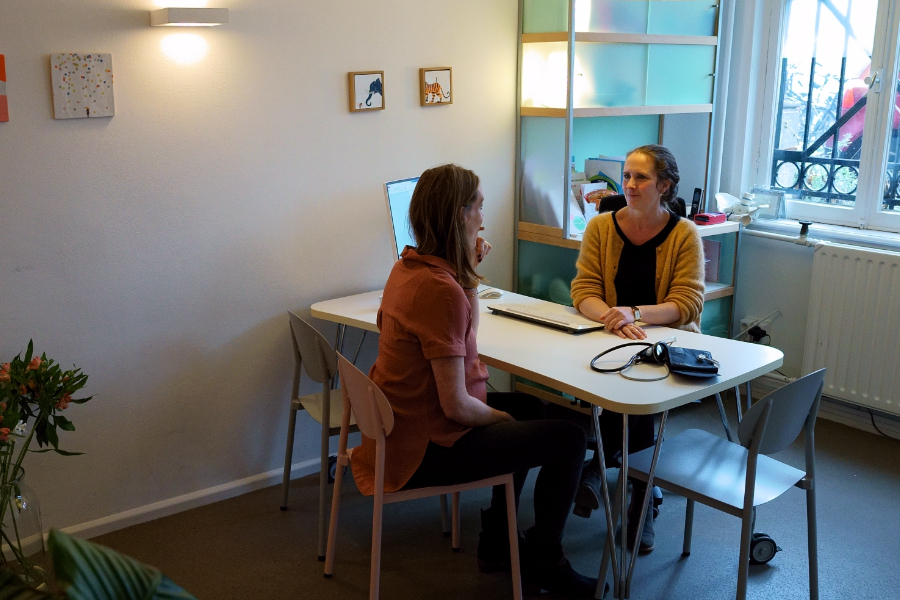
Our practice specializes in recognizing and discussing anxiety. We take extra time for this, outside of the standard checkups. You don’t have to wait until it feels overwhelming — you can bring it up even when it’s just a small voice in the back of your mind. Our goal is never to judge, but to help you.
- We are specially trained in this area
- We give it more attention than most other practices
- We create extra time outside regular checkups to talk about fear
- We do not judge — we have one goal: to help you!
Talking about the function of fear and understanding how fear works often brings a lot of insight. Fear isn’t pleasant, but it relates to essential human needs: love, safety, connection, and personal freedom.
What can you do if you feel anxious?
There are ways to reduce fear — and sometimes even make it disappear. Together, we’ll explore what you want and need to feel more confident about pregnancy and childbirth.
What helps differs for everyone, so we’ll find what works best for you. For example:
- Extra conversations with one of our midwives
- Birth preparation exercises
- Referral to a coach, therapist, or specialist
- Information about what to expect during pregnancy and birth
- Sometimes, insight is enough. Sometimes, more help is needed. It all starts with daring to speak up.
You decide whether — and how much — you want to talk about your fears. We don’t judge; we help.
Summary:
- We ask about your anxiety level with a simple question: “How anxious do you feel right now, on a scale from 1 to 10?” — this is the VAS score.
- A high anxiety level (>VAS score 5) can affect your pregnancy and childbirth.
- High anxiety levels are often linked to more medical interventions during birth. This is often because these women feel they might not be able to handle the challenges of childbirth.
- We screen at several points during your pregnancy to offer timely support.
- You decide whether — and how much — you want to talk about it. We don’t judge; we help.