Caesarean section explainedA caesarean section (C-section) is a surgical procedure in which the baby is born through an incision in the abdomen and uterus, instead of through the vagina. It may sound a little daunting, but it’s good to know that a C-section is now a very common and safe procedure.
About 1 in 6 babies in the Netherlands are born by caesarean section. Half of these are planned procedures, and the other half are unplanned. Whether you already know you’ll have a C-section or simply want to prepare for the possibility, this article will help you understand what to expect.
Planned vs. unplanned caesarean section
There are two types of C-sections:
- Planned (elective) caesarean section: This is arranged in advance — for example, when the baby is in breech position, the placenta covers the cervix, or there are medical reasons that make a vaginal birth unsafe.
- Unplanned caesarean section: This happens when complications occur during labour, such as when progress stalls or when the baby’s heart rate drops and birth needs to happen more quickly.
An emergency caesarean does not always mean a life-threatening situation, but it does mean the team needs to act promptly.
Both types of caesareans are safe, but the preparation and experience differ. With a planned C-section, you’ll know what to expect. With an unplanned one, things can move quickly, which may feel overwhelming.
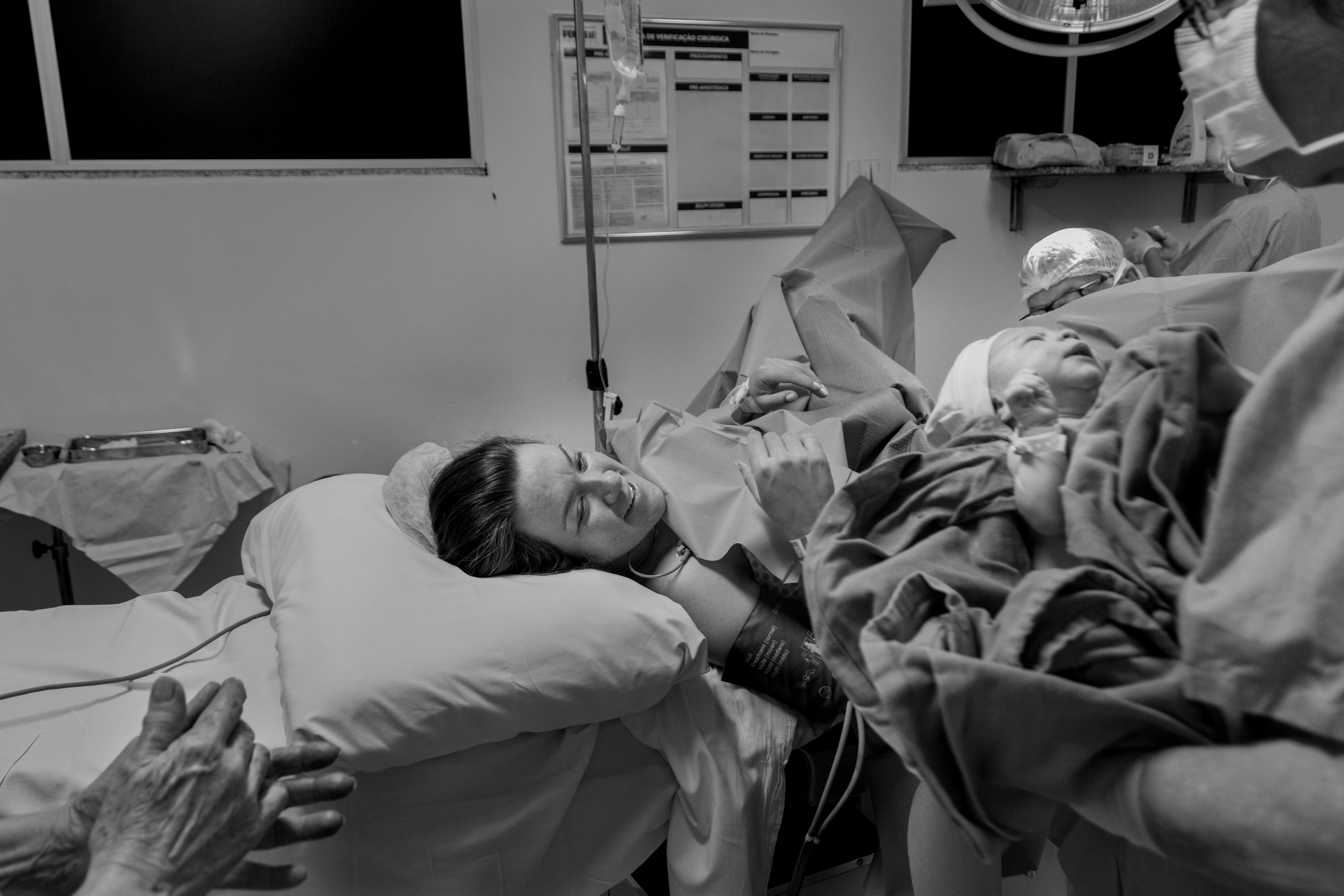
The operation: step by step
- Preparation:
- You’ll receive an IV line and a catheter to keep your bladder empty.
- The skin on your abdomen may be shaved and disinfected.
- You’ll usually have a spinal anaesthetic so you’ll be awake during the birth but won’t feel pain. In some emergency cases, general anaesthesia may be used.
- During the operation:
- A horizontal incision is made just above the pubic bone.
- The surgeons open the layers of tissue one by one until they reach the uterus.
- Your baby is usually born within 5–10 minutes after the surgery begins!
- The baby is briefly checked by the paediatrician.
- If your situation allows, your partner can stay with you, and skin-to-skin contact is often possible right after birth.
- After the birth:
- The placenta is removed manually by the gynaecologist.
- The uterus and abdominal layers are carefully stitched.
- This part usually takes longer than the birth itself — about 30–45 minutes.
More to read: www.nhs.uk - caesarean-section
Mother-assisted caesarean section
In a Mother-Assisted Caesarean Section, the mother lifts her baby out of her abdomen herself. This can sometimes be an option during a planned C-section. Read more on:
- www.thevbaclink.com - maternal assisted cesarean
- studiovbac.nl – mother-assisted caesarean section (Dutch)
- linda.nl – gynaecologist performed the first Dutch mother-assisted caesarean section (Dutch)
Are you interested in this option? Be sure to discuss it in advance with your gynaecologist! They can explain what is and isn’t possible in your situation.
Recovery after a caesarean section
Recovery from a C-section often takes longer than from a vaginal birth, as your body heals from both childbirth and abdominal surgery. This video explains clearly what happens during a C-section — and why recovery takes time.
What to expect:
- Pain and discomfort: It’s major abdominal surgery, so recovery takes several weeks. You may feel pain or pulling sensations around the wound in the first few days. Pain medication helps — and it’s important to take it.
- Moving: As soon as possible after surgery, you’ll be encouraged to move gently — showering and walking to the toilet. This helps prevent complications such as thrombosis. Don’t expect to be up and about within a week!
- Rest and recovery: Give yourself time. Many mothers feel better after about 10 days, and after 6 weeks can resume light household tasks — but full recovery can take months. Allow yourself that time.
- Scar: The incision is low on the abdomen. It will look red and swollen at first and may feel numb for a while. Over time, it becomes much less visible.
Practical tips:
- Ask for help with lifting and caring for your baby during the first weeks.
- Sit upright while feeding to reduce pressure on the wound. If your bed cannot be adjusted, rent a bed hoist or back support from a home-care store.
- Wear loose, comfortable clothing that doesn’t rub against the scar.
- Let the incision air-dry twice a day without clothing touching it.
- Visit www.dekeizersnede.club for information and specialised treatment for C-section scar recovery, as well as physical and emotional healing after a caesarean.
What does this mean for future pregnancies?
Having a C-section can affect future pregnancies, but not always. Many women can safely have a vaginal birth after caesarean (VBAC). This depends on your individual situation, the reason for your previous C-section, and your preferences in a future pregnancy.
Important to remember:
- A C-section is a safe and common way to give birth.
- Whether planned or unplanned, the hospital team ensures the best care for you and your baby.
- Discuss your wishes, such as skin-to-skin contact, even if you expect to have a caesarean.
- It’s major surgery, so recovery takes time. Listen to your body and ask for help when needed.
Do you have questions or concerns? Don’t hesitate to discuss them with us. We’re here to support you in every phase of your pregnancy.
This animation shows how a caesarean section is performed:
Would you like to see what a real caesarean looks like? Watch this video: