Want to get pregnant? Then it’s useful to know when you’re fertile. That doesn’t mean you need to grab a calendar and plan every time you have sex. Many couples conceive simply by listening to their bodies (and their desire). Still, it can be helpful to understand your cycle — especially if it’s taking a bit longer than you hoped.
What you do (and don’t) need to know about fertile days
- You’re only truly fertile a few days each month.
- Those days are around your ovulation (also called “the ovulatory phase”).
- Sperm cells live for about three days; an egg only for one.
- The best chance of pregnancy? When you have sex two to three days before ovulation.
- Your body gives signals around ovulation — like changes in vaginal discharge.
- You don’t necessarily need to calculate or test — having the desire for sex is often a good sign!
Chances are you’re already having sex around ovulation
Even if you don’t know exactly when it happens! Around ovulation, women tend to find their partner more attractive — and men often find women more attractive at that time too. So, the odds that you’ll have sex near your ovulation naturally increase. Our first advice: listen to your body.
How to calculate your fertile days
If you have a regular menstrual cycle, you can estimate your ovulation fairly well. Ovulation usually occurs about 14 days before your next period starts. Simply count back from the first day of your next period.
Examples:
- Cycle of 28 days → ovulation around day 14
- Cycle of 30 days → ovulation around day 16
- Cycle of 32 days → ovulation around day 18
Your fertile window starts about three days before ovulation. These are the days when your chances of getting pregnant are highest.
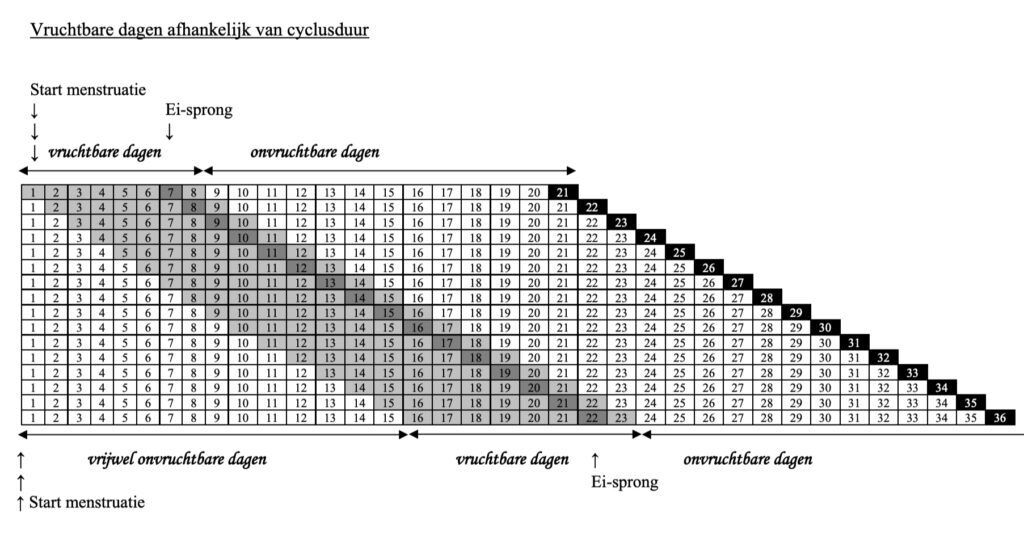
Fertile days
Egg and sperm: a race against time
An egg lives for about 24 hours. Sperm can survive up to 72 hours (and sometimes even longer). That’s why it’s smart to have sex before ovulation — this way, the sperm is already waiting in the uterus, ready for the egg to arrive.
Did you know your body helps out too?
- Around ovulation, the cervical mucus changes — it becomes more fluid and easier for sperm to swim through.
- Your discharge becomes clearer and more stretchy, a bit like raw egg white.
- The uterus becomes more “sperm-friendly,” allowing more sperm cells to survive.
- The egg is easiest to fertilize right after ovulation.
Your body actually wants you to get pregnant — and it gives you a helping hand!
Frequently asked questions
Do I need to know exactly when I ovulate?
Do I need to know exactly when I ovulate?
No, not necessarily. Many people get pregnant without tracking ovulation precisely. But if it gives you peace of mind, ovulation tests or cycle apps can help you estimate it.
How do I know if I’m ovulating?
How do I know if I’m ovulating?
Typical signs include a change in cervical mucus (clear and slippery), a slight rise in body temperature, or mild abdominal pain around mid-cycle.
When should I be concerned if it’s not working?
When should I be concerned if it’s not working?
If you’ve been trying for a year without success — or for six months if you’re over 36 — it’s a good idea to talk to your midwife or GP.
In short
You’re only fertile for a few days each month — and your best chance of getting pregnant is when you have sex just before ovulation. If you have a regular cycle, you can estimate your fertile window fairly easily. But even without tracking, your body often helps guide you: increased desire, changes in discharge, and a friendlier environment for sperm all increase your chances naturally.
So, listen to your body rather than your calendar. It’s better to stay relaxed than to feel pressured. If you’d like personal advice or want to check whether your body is ready for pregnancy, book a preconception consultation.