The birth of your baby is one of the most special moments in your life. It’s an intense and emotional experience — one where good support makes all the difference. Luckily, you’re not alone. Your partner and various professionals will be there to guide and support you. But who does what, exactly?
In this article, we explain how each role complements the others, so you can approach your birth with confidence. We’ll look at the role of:
- your midwife
- your (birth) partner
- the hospital team (including nurses, hospital midwives, and obstetricians)
- the maternity nurse
- and, if you choose, a doula and/or birth photographer
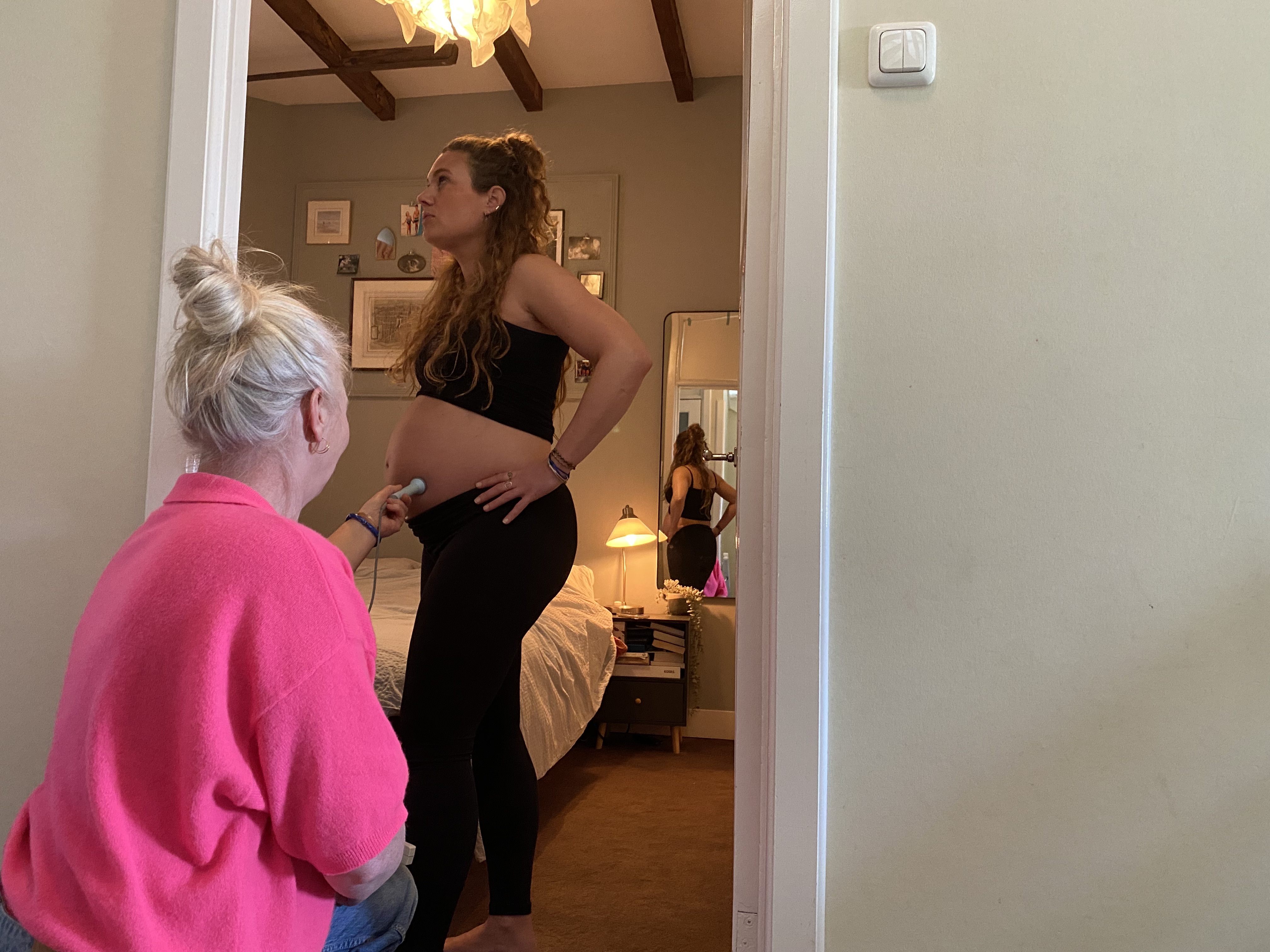
Our role as your midwife
Personal and medical care. We are your main point of contact throughout labour. We monitor your and your baby’s wellbeing, support you through contractions, and offer advice when needed. Our approach depends entirely on your wishes — whether you prefer calm presence or active coaching.
Our goal is simple: to make sure you and your baby come through the birth safely and that you can look back on a positive experience.
Practical support — so you can focus on giving birth. Whether you give birth at home or in the hospital, we make sure everything runs smoothly. At a home birth, we prepare the space and coordinate with the maternity nurse. If you’re planning a hospital birth, we arrange your admission and work together with the hospital team. This way, you can stay focused on yourself and your baby.
Safety first. We continuously monitor your health and your baby’s condition — by checking dilation, listening to the heartbeat, and assessing the progress of labour. If complications arise or you want pain relief, we hand over your care to the hospital team to ensure safety at all times.
Mental and emotional support: “watchful attendance.” We are there for you — quietly in the background if you need space, or close by for encouragement if you need hands-on coaching. This approach, called *watchful attendance*, means we are fully present, attuned to your needs.
Low-risk births. We guide births that proceed without medical complications. If a situation arises that requires specialist care, the hospital team takes over. We won’t be present during the delivery itself, but you’ll remain in good hands with the hospital midwives and obstetricians. You can read more about this in the article “Reasons for transfer during labour.”
Postpartum care — we stay with you. After birth, whether at home or in hospital, we’ll provide follow-up care during the postpartum period. If your birth was led by the hospital, they will inform us after delivery, and we’ll visit you the day after you return home for your first postnatal check-up.
The role of your partner
Essential for emotional support and practical help. With “partner,” we mean your significant other or chosen birth partner. In the next article, we’ll explore this role in more detail.
The hospital team: medical expertise when needed
Not everyone will need the hospital team during labour. They are involved only when a medical indication is present, for example:
- A previous caesarean section
- High blood pressure or gestational diabetes
- Complications during labour (such as a request for an epidural, weak contractions, or heavy bleeding)
The hospital team can perform additional medical procedures, such as a caesarean or vacuum-assisted delivery, ensuring you and your baby remain in safe hands if complications arise. You can read more about this in this article.
What does a doula do — and when might you choose one?
A doula is a non-medical birth coach who provides emotional and mental support before, during, and after labour. She complements the medical team and offers extra guidance if you want more continuous support.
A doula:
- Helps with breathing and relaxation techniques
- Offers continuous emotional and mental support
- Works together with us and your partner to honour your wishes
A doula can be especially helpful if you feel anxious about giving birth, have had a difficult previous experience, or if your partner cannot be fully involved. You can read more in our article on Doulas.
The role of the birth photographer
There are parents who choose to have a birth photographer present during labour and delivery. A birth photographer captures the birth in a respectful and unobtrusive way, without disturbing the calm atmosphere. The focus is not on medical details, but on the emotions, connection, and strength of the moment. Beforehand, discuss what you would like to have photographed — and what not — so the photographer understands your wishes. Later, you’ll be able to look back on this special experience with beautiful images that bring those memories vividly to life.
The role of the maternity nurse: care and support after birth
After your baby is born, the maternity nurse plays an essential role. She visits your home during the first 8 days after birth and helps with:
- Medical check-ups for you and your baby
- Support with breastfeeding or bottle feeding
- Advice on caring for your newborn
- Light household tasks, such as changing bed linen and small errands
The maternity nurse ensures you get the care and support you need in the first days after birth — so you can recover peacefully and build confidence as new parents. We’ll cover this more extensively in Module 6: The Postpartum Period.