From 28 weeks onward, we start checking the position of your baby. About 3 to 4% of babies are still in the breech position around week 36. In this article, we explain what that means, what your options are, and how we can support you. Because even with a breech position, you can look forward to a safe and well-informed birth — as long as you have the right information.
What is a breech position?
A baby in the breech position lies with the buttocks or feet pointing downward. There are several types of breech positions:
- Frank breech: buttocks down, legs extended upward.
- Complete breech: buttocks down, one or both legs bent downward.
- Footling breech: one or both feet are positioned to come out first.
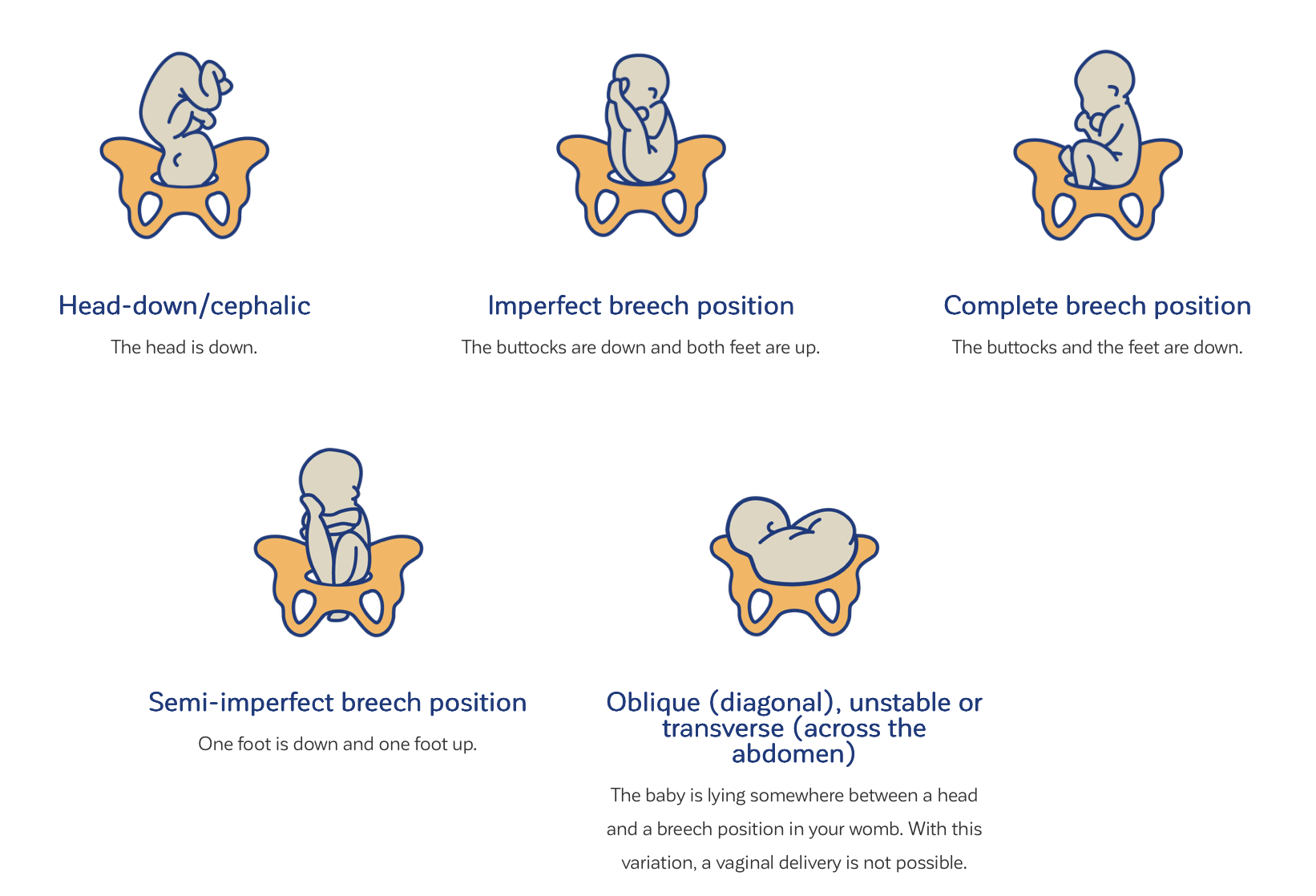
This usually becomes clear around weeks 34–36. That’s also the time to decide whether we need to take action — or perhaps not.
What can you do if your baby is breech?
Around 96–97% of babies turn naturally into a head-down position by week 35–36. If your baby doesn’t, we’ll discuss whether you’d like to try an external cephalic version (ECV) — a manual procedure in which a specially trained midwife or obstetrician gently tries to turn the baby from the outside.
An ECV is safe and often effective: in about half of the attempts, the baby successfully turns. And even if it doesn’t work, at least you’ve tried and know where things stand. Read more: stuitinwest.nl and www.nhs.uk.
What if you don’t want an ECV or if it doesn’t work?
Some parents choose not to attempt an ECV, or sometimes the turning simply doesn’t succeed. In that case, around week 36–37, we’ll refer you to the obstetrics department at OLVG hospital. There, you’ll discuss your options with the gynaecologist. You can choose between:
- A vaginal breech birth, if it’s medically safe for you and your baby.
- A planned caesarean section, if that’s safer or aligns better with your preferences.
The website stuitinwest.nl provides clear information about the advantages and disadvantages of both options. We recommend reviewing it beforehand, so you can discuss your questions more easily during your hospital consultation.
Summary
A breech position doesn’t automatically mean you’ll need a caesarean section. We’ll look together at what’s safest and most suitable for you. A turning attempt (ECV) can be a good option, and if it doesn’t work, you’ll discuss the next steps with the gynaecologist. You’re not alone in this process — we’ll guide you every step of the way.
What you can do yourself
Take a look at www.spinningbabies.com, where you’ll find practical exercises that can help encourage your baby to move into a head-down position at home.