Pregnancy-induced hypertension – also known as pre-eclampsia – is a condition in which you develop a high blood pressure during pregnancy, combined with protein in your urine or signs of temporary organ damage. Symptoms usually appear after the 20th week of pregnancy but can also occur in the days following birth.
How does pre-eclampsia develop?
The exact cause of pre-eclampsia is not known. Several factors are believed to play a role, such as:
- the development and implantation of the placenta;
- the way the mother’s blood vessels respond to substances released by the placenta;
- hereditary factors;
- and the mother’s general health, such as being overweight or having high blood pressure.
How common is it?
Around 2 to 5% of all pregnancies are affected by pre-eclampsia. The risk is higher if you have:
- diabetes;
- overweight or obesity;
- existing high blood pressure;
- a twin or multiple pregnancy;
- a mother or sister who had pre-eclampsia;
- a first pregnancy or a pregnancy with a new partner.
Women under 20 or over 35 years old also have a slightly higher risk.
Pre-eclampsia, eclampsia and the HELLP syndrome
- Pre-eclampsia is the medical term for pregnancy-induced hypertension.
- Eclampsia is a rare and severe complication involving seizures – short convulsions where the arms and legs become stiff and shake.
- HELLP syndrome is a serious variant that also affects the liver and blood clotting. HELLP stands for Hemolysis, Elevated Liver enzymes, Low Platelets – breakdown of red blood cells, elevated liver values, and a shortage of platelets. Diagnosis is made through blood testing.
How do you recognize pre-eclampsia?
In addition to high blood pressure, you may experience:
- Headaches
- Nausea or vomiting
- Blurred vision, seeing stars or flashes of light
- Upper abdominal pain or a tight “band-like” feeling
- Upper back pain
- Tingling in your fingers
- Swelling of the face, hands or ankles
- A flu-like feeling
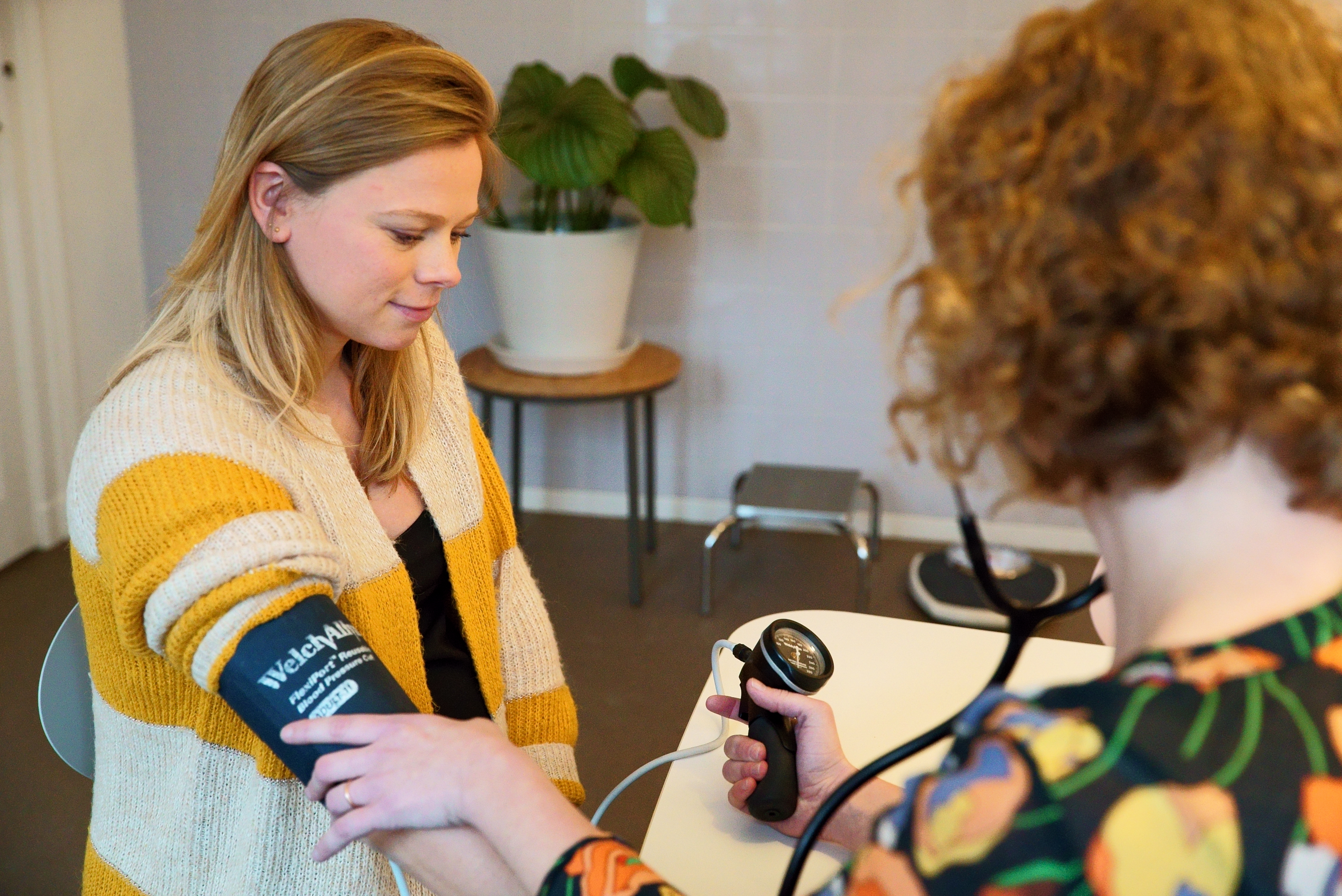
During your check-ups, we monitor your blood pressure and your baby’s growth closely. High blood pressure can reduce the function of the placenta, meaning your baby may receive fewer nutrients and grow more slowly.
Possible consequences
Once pre-eclampsia is diagnosed, your care will continue in the hospital (secondary care). You and your baby will be closely monitored. Doctors constantly weigh the benefits and risks of continuing the pregnancy or inducing labour earlier.
For the baby, pre-eclampsia can cause growth restriction, and in severe cases, early delivery may be necessary. For the mother, it can lead to:
- liver or kidney damage;
- blood clotting problems;
- in rare cases, fluid in the lungs or eclampsia.
Treatment
The only way to truly cure pre-eclampsia is to give birth. Until then, symptoms are managed:
- Medication to lower blood pressure and relieve symptoms.
- Magnesium sulfate to prevent seizures if your risk is high.
- In some cases, labour is induced early. If this happens before 34 weeks, you may receive medication to help your baby’s lungs mature.
What can you do yourself?
You cannot prevent pre-eclampsia – it is never your fault. But you can support your overall health:
- Rest: plan enough recovery time.
- Eat healthily: plenty of vegetables, whole grains, and not too much salt.
- Get enough calcium: about 1 gram per day (roughly 5 glasses of milk) can help lower your risk.
- Use low-dose aspirin (acetylsalicylic acid) and calcium: in some cases, we recommend these to reduce the chance of pre-eclampsia.
- Reduce stress and make time for relaxation.
When to call us
Contact us immediately if you experience:
- sudden headache or nausea;
- blurred vision, flashes or spots of light;
- pain high in the abdomen or back;
- a tight band-like feeling around your belly;
- swelling of your face, hands or ankles;
- tingling in your fingers;
- shaking or twitching of arms or legs;
- sudden nosebleeds or bleeding gums;
- flu-like symptoms or feeling unwell.
After birth
After giving birth with high blood pressure, you usually stay in the hospital for a few days. Your blood pressure will be monitored regularly, and sometimes you’ll need to continue medication for a while. During your postpartum check-up (around six weeks), your blood pressure will be measured again. If it remains unstable, your GP or an internist will continue follow-up care.
Women who have had pre-eclampsia have a higher long-term risk of heart and vascular disease. Therefore, it is recommended to:
- have your blood pressure checked annually for the first five years, then every three years;
- have regular blood tests for cholesterol, blood sugar, and kidney function;
- and maintain a healthy lifestyle (exercise regularly, avoid smoking, and eat a balanced diet).
Future pregnancies
The chance of pre-eclampsia returning is small but slightly higher. In a next pregnancy, you’ll receive extra monitoring. We often recommend:
- low-dose aspirin and calcium from the first trimester;
- adequate vitamin D intake;
- and regular blood pressure checks.
Recovery and emotions
Experiencing pre-eclampsia can be intense. Some women continue to feel tired, sensitive to light and noise, or have trouble concentrating for weeks or months. Emotionally, it can also have a big impact. Talk about it with us, your GP, or a psychologist. You can also connect with others through the HELLP Foundation (Dutch) or preeclampsia.org.