Birth: What happens in your body
Stages of labour
The birth process is a journey in which your body works step by step toward the arrival of your baby. This process unfolds in distinct phases, each with its own features, challenges and emotions. By understanding what to expect, you can face this important event with more confidence and calm.
In this article we explain the four phases of labor: the latent phase, the active phase, the expulsion phase and the third stage (delivery of the placenta).
Latent phase: what you might feel, how long it lasts?
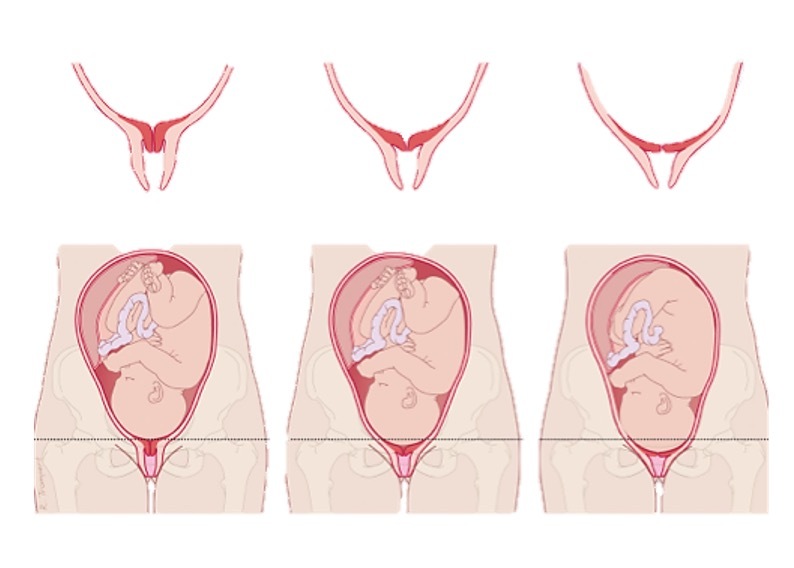
The latent phase is the beginning of your labor. Contractions at this stage have just started and are still short and irregular. Between contractions you are often still quite alert. During this phase your cervix will first soften (efface), shorten and assume a favourable position; once this has occurred, the opening (dilation) may begin.
What might you notice?
- Irregular contractions gradually becoming stronger and more regular.
- Backache or a dull ache in your lower abdomen.
- Mucus discharge, sometimes tinged with a little blood (the “mucus plug”). This can also occur days before labor begins, so it is not always a sign that labor has started.
How long does the latent phase last?
The latent phase can last a few hours up to even days, especially with your first baby. This is normal, even though it can feel frustrating. Try to rest during this phase, find distraction, eat and drink well. Warmth (like a warm shower or hot‑water bottle) may bring relief. Try to sleep and rest as much as possible; if you are awakened by cramps, taking a paracetamol is okay.
Active phase: intensity increases
In the active phase the contractions become stronger, more regular and more intense. This is when dilation progresses more rapidly. Contractions may come roughly every 3‑5 minutes and last 60‑90 seconds.
What might you notice?
- Stronger, regular contractions that are harder to breathe through. You really need to focus.
- Feeling of pressure in your pelvis.
- Emotional changes: you may become more serious, more inward‑focused.
How long does the active phase last?
With a first birth the active phase may last 4–10 hours, but this varies a lot from person to person. Focus on your breathing, change positions and trust your body. This is often when you decide whether you will give birth at home or move to a hospital or birth center.
Transition phase: nearly full dilatation
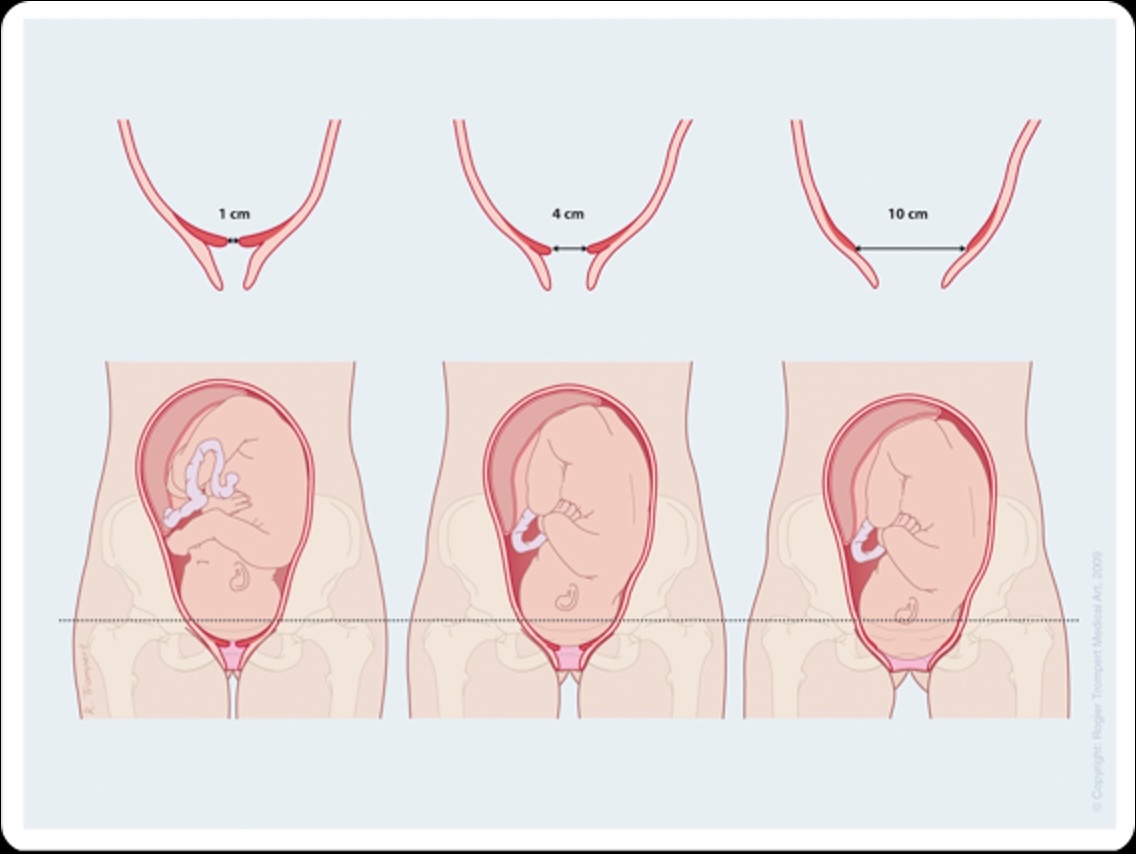
When you are about 8 cm dilated you enter the transition phase. This is the shift between dilation and the pushing phase.
What might you notice?
- Very strong contractions coming often, sometimes every 1‑2 minutes.
- You may feel an early urge to push.
- Many women experience a brief moment of panic. This is normal, because you sense the peak is near. We and your partner are there to support you.
- You may become suddenly very alert between contractions instead of tired.
How long does the transition phase last?
This phase is usually short, averaging about 1 hour. But everything between 2 minutes and 2 hours is completely normal!
Expulsion phase: pushing and birth
Once you are fully dilated (cervix open to 10 cm), the expulsion phase begins. This is when you actively push to let your baby be born. Your body often helps with the strong urge to push.
What might you notice?
- Strong urge to push.
- Pressure in your pelvis, rectum and vagina.
- You may get longer pauses between contractions.
- A sensation of stretching as your baby’s head appears.
How long does the expulsion phase last?
With a first baby the average is 1‑1.5 hours; with your second child it may be around 20 minutes. Once the head is born, the rest of the body often follows soon after. When your baby is born we place them immediately on your chest.
Third stage (placental birth): the final part
After your baby is born the umbilical cord is still attached to the placenta. As long as the placenta remains attached, the baby continues to receive oxygen and nutrients via the cord. Once the cord has stopped pulsing it is clamped and cut. Your uterus then immediately begins to contract so the placenta detaches and is born. You will usually push one more time and then the placenta is delivered, usually within about 30 minutes. Sometimes a shot of oxytocin is given in your thigh to help your uterus contract.
What might you notice?
- A few mild contractions that help the placenta detach.
- Sometimes a light urge to push.
- A warm, slippery feeling when the placenta is born.
- A feeling of relief – the birth is officially complete.
We check carefully whether the placenta is complete and whether there is any excessive bleeding. This is an important part of the birth.
Post‑care: stitches and baby check
When your baby’s head is born your perineum may tear. You may not feel it. After the placenta is born we check whether there is a tear. In first births this is common: about 80‑90% of women have a minor or larger tear.
Sometimes we make an incision (episiotomy). We do this only if medically necessary — for example when the baby’s heartbeat is not optimal or when there is increased risk of a serious tear. We always numb the area so you feel nothing.
Baby check:
After you and your baby have had skin‑to‑skin contact, we perform a physical examination of your baby. We check that your baby looks healthy and responds as expected for a newborn. We weigh your baby, measure oxygen saturation (with a small light on their hand or foot) and administer vitamin K (with your consent). We also assist with breastfeeding.
We’ll celebrate with a sweet treat in your favourite flavour to mark the birth!
Bij ongeveer 10% van de bevallingen begint de bevalling met het breken van de vliezen. In de overige 90% gebeurt dit ergens tijdens de bevalling, tussen de eerste weeën en de geboorte van de baby.
Summary: What to expect per phase?
- Latent phase: Mild, irregular contractions. Can last hours to days. Rest and relaxation important.
- Active phase: Stronger, regular contractions. Dilation progresses more quickly. Focus on breathing and changing positions.
- Expulsion phase: Pushing and birth of baby. Usually lasts 1‑2 hours.
- Third stage: Delivery of the placenta, usually within 30 minutes after the baby.
- Post‑care: We will check your baby, repair any tear if needed, help you start breastfeeding…and celebrate the birth of your child!
Remember that every birth is unique. It may happen faster or slower than you expect. Trust your body, your preparation and our support. If you have questions or feel unsure about what you are experiencing, always reach out to us. We’re here to support you.